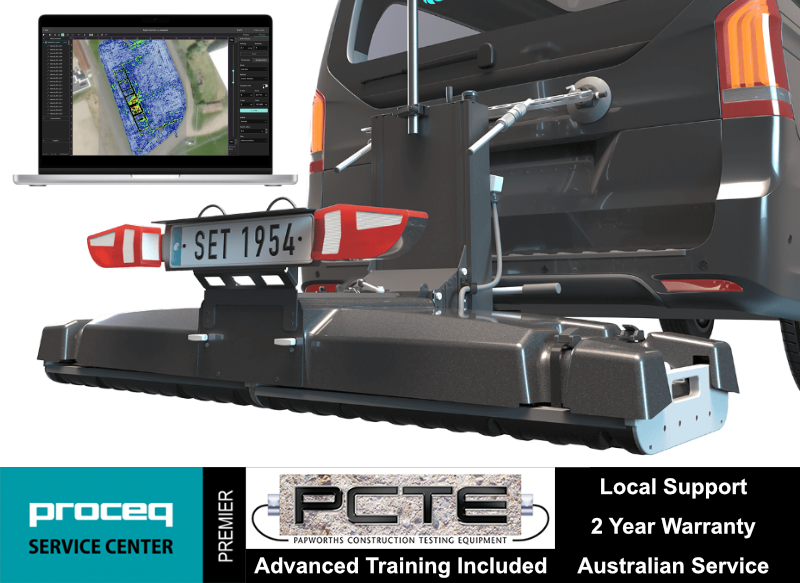
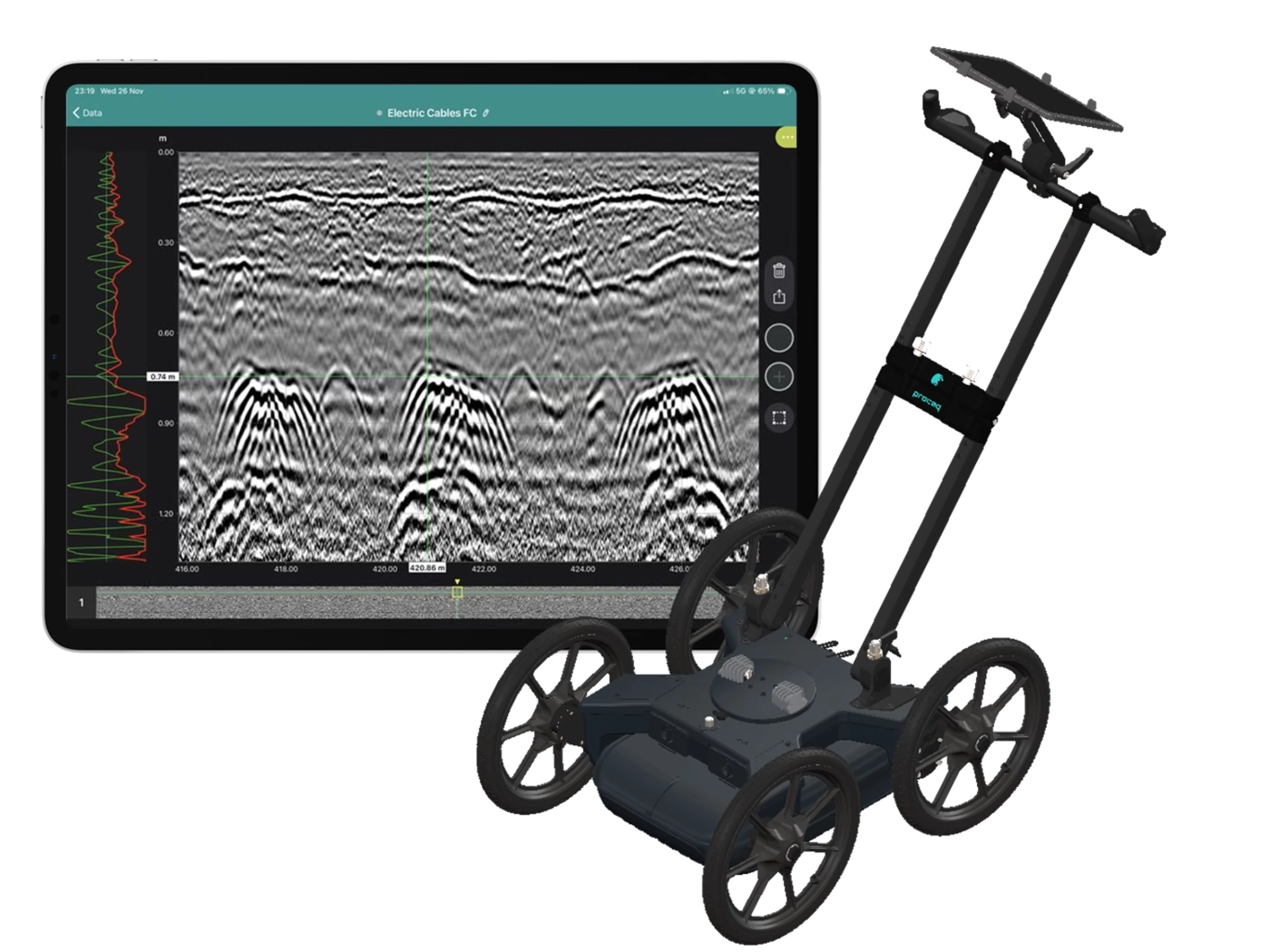
PCTE offers high-performance GPR utility locators and underground utility locator equipment, designed to detect and map underground utilities with precision. Our utility locating equipment is essential for professionals in construction, utilities, and civil engineering, allowing you to quickly and efficiently locate pipes, cables, and other underground infrastructure without causing disruption. Whether you need portable GPR utility locators for small-scale projects or advanced equipment for large infrastructure work, PCTE provides the right tools for the job.
The Benefits of Choosing PCTE for GPR Utility Locators
With years of experience and expertise in providing high-quality utility locating equipment, PCTE is a trusted name in the industry. Our GPR utility locators are designed for accuracy, reliability, and ease of use. Our GPR utility locators provide precise data to ensure safe and efficient work.
Our utility locating equipment provides real-time, high-resolution scans of underground utilities, ensuring accurate identification of pipes, cables, and other infrastructure. Designed for ease of use in the field, our GPR utility locators are lightweight and portable, ideal for fast on-site testing and utility mapping. From locating utilities to mapping underground infrastructure, our GPR utility locators are versatile and reliable for all utility mapping applications.
Equipped with the latest GPR technology, our utility locating equipment delivers precise, non-invasive scans, reducing the need for costly excavation. PCTE offers ongoing support for all our underground utility locator equipment, ensuring you get the best results from your equipment.
Underground Utility Locator Equipment: Why Choose It for Your Projects?
Underground utility locator equipment is an essential tool for any construction or utility project that involves working with or near underground infrastructure. At PCTE, we provide GPR utility locators that deliver real-time, high-resolution scans of underground utilities, including water pipes, electrical cables, and more.
Our utility locating equipment helps you identify the exact location of utilities before excavation, ensuring safety, reducing the risk of accidental damage, and improving project efficiency. With our GPR utility locators, you can confidently carry out your projects knowing you have the most accurate data available. GS8000 Lite is a lightweight GPR utility locator for detecting utilities and mapping underground conditions. We also offer GS9000, a versatile utility-locating system with real-time 3D scanning for complex infrastructure mapping.
Explore More
Our product range includes construction testing instruments, advanced software, and non-destructive testing (NDT) solutions.
-
Construction Testing Instruments & Tools: Essential tools for testing the physical properties of construction materials to ensure they meet safety and durability standards.
-
Software Solutions: Our cutting-edge software streamlines data analysis, test documentation, and reporting, boosting your testing efficiency and productivity.
-
Non-Destructive Testing (NDT): PCTE’s GPR equipment enables in-depth evaluations without causing damage, making it ideal for structural assessments and utility detection.
-
CMT Laboratory Equipment: Designed for accurate testing across a range of materials, our equipment ensures consistent, reliable results.
Warranty & Returns
PCTE offers a comprehensive warranty on all GPR utility locators and utility locating equipment to ensure long-term reliability. Returns are accepted within 7 days if the equipment is unused and in its original condition. For faulty products, please get in touch with us during the warranty period to arrange a replacement or repair. For more details, please refer to our Warranty & Returns Policy.
Shipping & Delivery
PCTE ensures fast, reliable delivery of all GPR utility locators and utility locating equipment. Delivery times are estimates, and we aim to deliver your equipment promptly. If you have specific shipping needs, refer to our Shipping & Delivery Policy or contact us via the Contact Us page for further assistance.
FAQs
What is the difference between EM and GPR?
Electromagnetic (EM) locators and Ground Penetrating Radar (GPR) are both used to locate underground utilities, but they operate in different ways. EM locators detect the magnetic field generated by metallic utilities, while GPR uses electromagnetic waves to scan and create detailed images of subsurface structures.
How does GPR work to locate underground utilities?
GPR sends electromagnetic waves into the ground, which then bounce back when they encounter objects such as pipes, cables or voids. The time it takes for the waves to return is used to calculate the depth and location of the subsurface object. The results are displayed on a screen in real time, allowing operators to map underground infrastructure with high accuracy.
How accurate are GPR scans in detecting utilities?
GPR utility locators are highly accurate at detecting utilities, with results typically within a few centimetres of the actual location. Accuracy can be influenced by factors such as soil type, utility depth, and the material being scanned. For example, GPR is more effective at identifying metallic utilities, but it can also detect non-metallic utilities such as PVC pipes and drainage systems.
Can GPR locate non-metallic utilities?
Yes, GPR is effective at locating both metallic and non-metallic utilities. GPR uses high-frequency radar waves to detect a wide variety of materials, including PVC, concrete, and fibreglass pipes. This makes it an ideal solution for locating all types of underground utilities in diverse environments.
What factors can affect the performance of GPR?
Soil Composition: Highly conductive soils, such as those rich in clay or salt, can absorb radar waves and reduce the effectiveness of GPR.
Depth of the Utility: The deeper the utility, the more challenging it can be for GPR to detect, although modern systems can still detect objects at significant depths.
Utility Material: GPR performs better on non-metallic utilities and in environments where metallic objects are absent or minimal.
Moisture Content: High moisture content in the ground can increase radar wave penetration, but may also result in signal distortion if too high.
%20vector%20logo.svg)